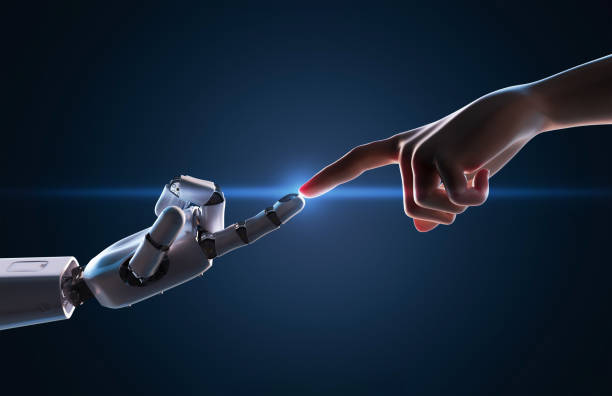
Where We Stand on AI: An Update from Brazos Bookkeeping
Almost two years ago, I wrote this article about artificial intelligence and what I thought it might mean for the bookkeeping profession.
A lot has changed since then. What was largely speculation at the time has become a part of our everyday work. AI is no longer something we're preparing for. It's here, and it's changing how bookkeeping gets done.
At Brazos Bookkeeping, we're using AI every day, across much of what we do. But we've also spent a considerable amount of time thinking about how to use it responsibly, what it means for our clients, and what it means for the future of our profession.
We've learned a lot along the way, and our thinking is evolving continually.
Here's where we stand today.
First, a responsibility to our clients
We believe we owe our clients two things when it comes to AI: the highest practical standards of security and the greatest possible benefit from the technology.
Those priorities have to go hand in hand.
Our clients trust us with some of the most sensitive information their businesses possess. Financial records reveal a great deal about a company, and protecting that information is a responsibility we take seriously.
That's why we don't use free AI plans or tools that train their models on client data. We evaluate the security and data-handling practices of the tools we adopt, and we don't introduce new technology into our workflows simply because it's available or impressive.
That same philosophy extends beyond AI. We're continually strengthening our broader cybersecurity practices, including multifactor authentication, endpoint management, VPNs, and other safeguards designed to protect the information entrusted to us.
Of course, security alone isn't enough. We also have a responsibility to make sure our clients benefit from these advances.
We don't believe business owners should have to become AI experts to take advantage of what's happening in accounting technology. That's part of our job. We should be the ones learning, testing, evaluating, and implementing these tools so our clients can benefit from them without having to navigate the technology themselves.
What we're actually doing with AI
There's a lot of conversation about what AI might eventually do for accounting. We're more interested in what it can reliably do today.
And we're finding some pretty remarkable applications.
For certain clients with particularly high transaction volumes, we've implemented agentic AI tools that process bank feed activity faster and more accurately than QuickBooks can on its own. Our clients still operate in QuickBooks Online, but we're integrating specialized technology that can handle particular tasks more effectively.
We're also using visual AI to simplify receipt management, something we'll discuss in more detail shortly.
And we're developing custom Claude Skills to standardize and accelerate recurring work. These tools help us perform repetitive tasks with greater consistency while reducing the time required to complete them.
Importantly, we're not relying exclusively on general-purpose AI models. We're combining them with specialized accounting and bookkeeping software designed for the requirements of financial work.
The result is a level of automation and capability that simply wasn't practical a few years ago.
Some of these improvements save time on work we were already doing. Others make it possible to offer services and capabilities that previously required more time than a business owner could reasonably justify paying for.
That second category is especially exciting to us.
A real example of what this looks like
One of our clients has approximately 15 employees working on jobs across central Texas. Throughout the week, these employees purchase supplies, materials, and equipment needed to complete their work.
Historically, the process for accounting for those purchases was fairly cumbersome.
Employees were expected to photograph their receipts and email them to the office. For a technician moving between job sites, that's one more administrative task to remember in the middle of an already busy day.
Once those emails arrived, an employee in the office had to sort through them and manually enter and categorize each receipt in QuickBooks.
Because the process was entirely manual, there was no opportunity for the system to learn from previous transactions. The same types of purchases required the same repetitive work, week after week.
That process consumed approximately four to five hours of the office employee's time every week.
We recently implemented a visual AI solution to change that.
Now, when an employee makes a purchase, they can simply take a picture of the receipt and text it to a dedicated phone number. The AI reads the receipt, extracts the relevant information, and codes the transaction directly into QuickBooks.
It's a relatively simple change, but consider what it accomplishes.
The field technicians have an easier way to submit receipts. Transactions can be processed more quickly and consistently, with less opportunity for manual data-entry errors. And the office employee no longer has to spend four or five hours every week performing the same tedious task.
But here's the part we find most interesting: that employee hasn't been replaced. She's been freed up.
Those four or five hours each week can now be spent helping with the actual operations of the business. Instead of sorting through emails and manually entering receipts, she can devote that time to work that requires her attention, judgment, and knowledge of the company.
Think about that for a moment. That's potentially more than 200 hours per year redirected from repetitive administrative work toward helping the business operate more effectively.
And we were able to introduce this capability without increasing the client's bookkeeping fees.
The client is receiving a better process, an additional capability, and more productive time from an existing employee, all for the same price.
Now, we'd be leaving out an important part of the story if we pretended the transition was completely effortless.
This is still relatively new technology. There's a learning curve, and getting everything to work reliably requires time, testing, adjustments, and ongoing oversight.
In some respects, we're trading one type of work for another. Less manual data entry, but more attention devoted to managing the systems that perform it.
That's especially true at this early stage of AI adoption.
And that's okay.
The objective isn't necessarily to eliminate every hour of work involved in the process. It's to replace repetitive, low-value work with a more efficient system that produces better results.
As the technology matures and we become more experienced with it, we expect the management burden to decrease as well.
This is an ongoing implementation, and we're still learning from it. But the potential is already clear.
This is a practical example of AI not replacing a job, but making the person doing that job more productive.
The business still needs that employee. In fact, it can now make better use of her skills because she isn't spending so much of her week doing work that a machine can handle.
And that's a distinction we think matters enormously as we consider AI's impact on the overall workforce.
The opportunity comes with new challenges
In some ways, there's never been a better time to be in the bookkeeping profession.
Technology is increasingly handling the tedious work that has historically consumed so much of a bookkeeper's time. And it's creating opportunities to deliver more timely, useful financial information to business owners.
But in other ways, the job has never been more demanding.
Cybersecurity risks are greater. The technology changes constantly. Evaluating new tools, understanding their limitations, testing their accuracy, and integrating them into existing accounting systems all require significant time and effort.
Our receipt-processing example illustrates this well. The technology can perform a task that previously required hours of manual work, but somebody still has to understand the system, monitor its performance, and make sure the results are accurate.
And perhaps most importantly, automation doesn't eliminate the need for accounting expertise. It changes where that expertise is needed.
That's an important distinction, and one we think is getting overlooked in much of the conversation about AI.
We've been through a transition like this before
The bookkeeping profession has already experienced a major technological shift.
Beginning around 2013, the development and widespread adoption of QuickBooks bank feeds fundamentally changed the work of a bookkeeper.
Before bank feeds, much of the job involved manually recording and categorizing transactions. As that work became increasingly automated, the role evolved.
A good bookkeeper became less of a data-entry clerk and more of a facilitator, or in some cases, something resembling a controller.
Someone still had to make sure all the bank and credit card statements were accounted for. That receipts were collected. That connected software was syncing properly. That accounts receivable and payable were being managed, vendors were getting paid, and the countless moving parts of a business's financial operations were working together.
The technology made the individual tasks easier, but it didn't eliminate the need for someone who understood how all those tasks fit together.
AI is accelerating that same transition.
And we think the best way to understand the bookkeeper's evolving role is to think about an airline pilot.
AI is likely becoming the autopilot. The bookkeeper is the pilot.
Modern commercial airplanes are capable of flying much of a trip on autopilot.
But nobody would suggest removing the pilots.
Why?
Because flying an airplane involves considerably more than holding the controls. Pilots monitor fuel levels, weather conditions, aircraft systems, communications, and dozens of other factors that contribute to a safe flight.
They're also responsible for the critical moments, particularly takeoff and landing. And when something unexpected happens, they need to recognize the problem, understand what it means, and know how to respond.
The autopilot is an extraordinary tool. But its effectiveness depends on having qualified people operating and overseeing the aircraft.
I certainly wouldn't want to fly a commercial airplane just because someone told me the autopilot could handle most of the work. I wouldn't know what I didn't know. A gauge could be reading incorrectly, a system could be malfunctioning, or something could be developing into a serious problem, and I might not even recognize it.
I want someone in that seat who understands how to fly the plane.
We believe bookkeeping with AI will continue developing into working much of the same way.
Just because a transaction can be automatically categorized doesn't mean it was categorized correctly.
Just because two software systems are connected doesn't mean the information is flowing between them properly.
And just because a balance sheet looks right doesn't mean it is right.
In fact, automation introduces a particular challenge: when more work happens without direct human involvement, errors can become harder to recognize.
That's where accounting knowledge, professional judgment, and an understanding of the underlying systems become perhaps more important than ever.
A qualified bookkeeper knows what to look for, what questions to ask, and how to investigate when something doesn't make sense.
Like a pilot, the bookkeeper is especially important during critical moments: introducing unfamiliar transactions, integrating new systems, resolving discrepancies, and bringing everything together for an accurate, timely month-end close.
The goal isn't to replace the bookkeeper with AI. It's to equip a knowledgeable bookkeeper with an extraordinarily capable set of tools.
That's the model we're building around at Brazos Bookkeeping.
So what is the bookkeeper's job becoming?
In many ways, it's the same job we've been moving toward for years.
Our responsibility is to facilitate an accurate, efficient, and timely month-end close, while helping our clients maintain financial systems they can depend on.
But there's an increasingly important addition to that responsibility.
We believe it's now our job to identify, evaluate, and implement the best available technology on behalf of our clients.
That means understanding which tasks should be automated, which require human oversight, and which tools are appropriate for a particular business.
It also means recognizing that not every new AI capability is ready for production use. Something that works beautifully in a demo may not be dependable enough to handle real financial information.
We're not interested in adopting technology for the sake of saying we're using AI. We're interested in technology that makes our clients' accounting more accurate, more efficient, more secure, or more useful.
And as the technology improves, we expect the bookkeeper's role to continue shifting away from processing information and toward overseeing systems, solving problems, and helping business owners understand what their numbers are telling them.
What about jobs?
It's a fair question. And we don't think there's a simple answer.
AI will almost certainly change how accounting teams are staffed, both inside accounting firms and within the businesses they serve.
Some tasks will disappear. Others will change substantially. New responsibilities will emerge.
This is happening at a time when the accounting profession is already facing demographic challenges, including an aging workforce and fewer young professionals entering the field.
Technology may help address some of those pressures by allowing accounting professionals to accomplish more without proportionally increasing headcount.
But we don't believe the right way to think about AI is simply as a tool for eliminating jobs.
Our own experience with visual AI is a good example. We didn't eliminate a position. We helped an existing employee spend less time on repetitive data entry and more time contributing to the operations of the business.
That's the kind of productivity improvement we expect to see much more frequently.
And frankly, there's something encouraging about that. Much of the work being automated is the repetitive, tedious work that people would rather not spend their days doing anyway.
If technology can take over those responsibilities while freeing people to focus on more meaningful and productive work, that's an opportunity worth pursuing.
Of course, not every situation will play out that way. Some positions will undoubtedly be affected as businesses adapt to new technology.
But the more interesting question, in our view, is what becomes possible when the time and cost required to perform financial work decrease dramatically.
And that brings us to what may be the biggest opportunity of all.
When something gets easier and cheaper, we tend to do more of it
There's an interesting story from the avocado industry that I think illustrates where all of this may be headed.
In 1997, the United States began lifting restrictions on Mexican avocado imports. California avocado growers were understandably concerned. More competition, and more available supply, seemed likely to hurt their businesses.
But something unexpected happened.
As Mexican avocados became available throughout the year, avocados went from being a relatively seasonal specialty item to a staple in grocery stores and restaurants across the country.
Consumers started eating more of them. Restaurants found new ways to use them. Demand expanded dramatically.
According to this Associated Press story published by KPBS, the amount of avocados available per person in the United States tripled between 2000 and 2021.
California growers ended up supplying a smaller percentage of the total market, but the overall market had grown so much that many benefited from the expansion.
In other words, making avocados more accessible didn't simply redistribute existing demand. It helped create entirely new demand.
We think something similar is going to happen in bookkeeping and accounting.
Consider how many business owners currently make financial decisions with incomplete or outdated information (hint, it's most).
How many only review their financial statements when it's time to file taxes?
How many would benefit from monthly reporting, better cashflow visibility, more frequent analysis, or deeper insight into their operations, but haven't been able to justify the cost?
Historically, much of that work required significant amounts of manual effort. Even when the information would have been valuable, the economics didn't always make sense.
AI has the potential to change that equation.
When financial work becomes faster and less expensive to perform, businesses don't necessarily purchase the same amount of accounting for less money.
They may begin using accounting services they previously couldn't afford. They may request more frequent reporting, more detailed analysis, and more sophisticated financial oversight.
Work that once seemed excessive or impractical may become a normal part of operating a well-managed business.
Our receipt-processing example is a small illustration of this same principle.
We didn't simply find a way to perform the same task with fewer people. We introduced a new capability that improved the client's operations, freed up an existing employee's time, and made the accounting process more efficient without increasing the price.
The client is getting more value from its accounting systems, and the employee is getting more productive use out of her time.
And that's just one application.
Imagine what becomes possible as hundreds of similar improvements make their way into everyday accounting.
The opportunity isn't simply to make bookkeeping cheaper. It's to make better bookkeeping more accessible.
And that creates an opportunity for the entire profession.
Not necessarily more of the tedious work that technology is eliminating, but more of the work that actually helps businesses operate better.
That's the future we're most excited about.
Where Brazos Bookkeeping goes from here
Nobody knows exactly how AI will reshape the economy over the next decade.
Maybe it changes nearly every job beyond recognition and we're all collecting universal basic income on the beach. If that happens, we'll see you there!
But our expectation is that it will unlock enormous amounts of productivity and create opportunities that are difficult to fully appreciate today.
For bookkeeping, we think that means more automation, more accessible financial information, and a greater emphasis on professional judgment, oversight, and meaningful analysis.
We're approaching that future with both enthusiasm and a healthy respect for the responsibility involved.
We'll continue investing time in understanding these tools, testing them carefully, protecting our clients' information, and implementing the ones that genuinely improve our work.
We'll also continue to rely on the accounting knowledge and professional judgment of our team. Technology should strengthen those capabilities, not substitute for them.
Our clients shouldn't have to choose between an experienced bookkeeping team and the advantages of modern AI. They should have both.
That's what we're working to deliver at Brazos Bookkeeping.
And we believe the best is still ahead.